
Winter Adventures: Keeping Your Solar Gear Running in the Cold
Don't let the cold stop your solar setup. Learn expert tips for maximizing your solar panels and protecting your batteries to stay charged during winter adventures.
SOLAR-POWERED GEAR
9/24/20253 min read
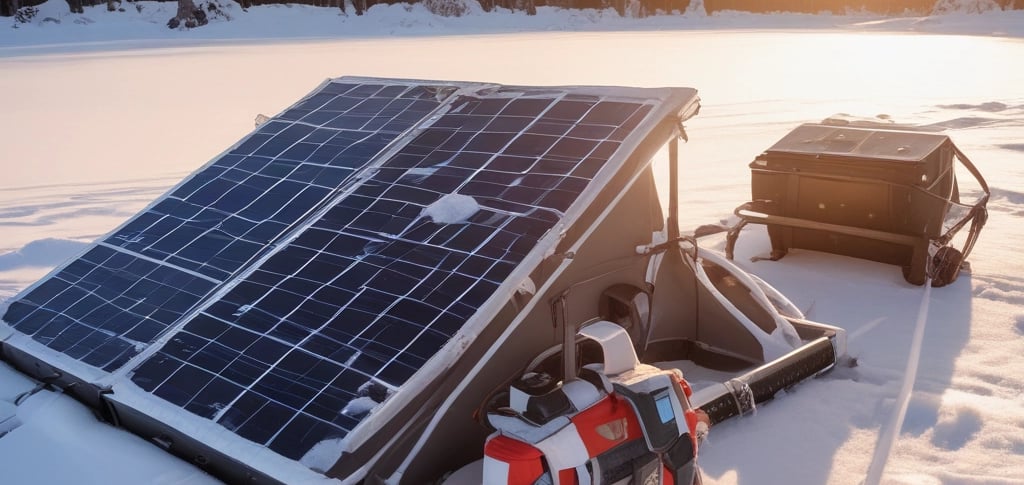
The serene beauty of a winter landscape is a powerful call to adventure. But for the modern explorer, the shorter days and colder temperatures pose a unique challenge: keeping your tech charged. While the sun may seem less potent in winter, your solar-powered gear can still be a reliable companion with the right strategy.
At Gadget Earth, we believe that your journey should be powered by innovation, no matter the season. This guide will teach you how to master solar power in winter, providing practical tips to ensure your panels and batteries perform at their best when the mercury drops.
Understanding the Science of Solar in the Cold
A common misconception is that solar panels stop working in the cold. In fact, the opposite is true for the panels themselves!
Solar panels work by converting light—not heat—into electricity. The photovoltaic cells inside actually become more efficient at lower temperatures, as the cold reduces electrical resistance. However, the real challenges for solar panels in cold weather are:
Shorter Daylight Hours: Less time for your panels to collect energy.
Lower Sun Angle: The sun sits lower in the sky, reducing direct exposure.
Obstructions: Snow, frost, and condensation can block the panels.
Battery Performance: This is the biggest hurdle. The batteries that store your solar power (like those in your phone or power bank) are far less efficient in the cold.
With these factors in mind, here is your essential guide to conquering winter solar charging.
Tip 1: Maximize Your Sunlight
Winter sunlight is a precious resource. To make the most of every ray, you need to be strategic with your panel placement.
Adjust the Angle: Unlike summer when the sun is high, the winter sun has a lower arc. Angle your panels to face the sun directly, ensuring they are perpendicular to its rays. If you are stationary for a while, adjust the angle every few hours.
Find a Reflective Surface: Snow can actually be your friend! A clean, white snowfield acts as a natural reflector, bouncing sunlight onto the underside of your panels. This is especially effective with bifacial solar panels, which are designed to capture light from both sides.
Clear the Obstacles: Before setting up camp, find a spot free of shadows from trees or rocks. A tiny shadow on even one solar cell can drastically reduce the output of the entire panel.
Tip 2: Protect Your Batteries from the Cold
While the solar panels themselves may thrive in the cold, their lifeblood—the batteries—do not. Lithium-ion batteries (used in most power banks, phones, and cameras) lose capacity and can be permanently damaged when charged in freezing temperatures.
Keep Them Warm: This is the most crucial tip. Store your power bank, batteries, and phone in an insulated case, your sleeping bag at night, or a pocket close to your body heat during the day.
Warm Before Charging: Never charge a freezing battery. Always allow your power bank or device to warm up to a safe temperature (above 32°F / 0°C) before plugging it into your solar panel. Some power stations have built-in heating elements for this purpose, making them a top-tier piece of cold weather tech.
Charge a Power Bank First: For the most reliable setup, use your solar panel to charge a warm power bank, and then charge your devices from the power bank. This ensures a consistent, regulated power flow.
Tip 3: Manage Your Power Usage
In a winter setting, power is a finite resource. Being mindful of your energy consumption is key to staying charged.
Prioritize Devices: Decide what's truly essential. Your GPS and headlamp are likely more critical than streaming video on your phone.
Use Power-Saving Modes: Enable airplane mode on your phone, turn off GPS and Wi-Fi, and reduce screen brightness to conserve battery life.
Tip 4: Choose the Right Gear for the Right Season
Your gear matters. For winter, it's worth investing in gear designed for the conditions.
High-Efficiency Panels: Look for monocrystalline silicon panels with high conversion efficiency. They perform better in low-light conditions and can capture more energy from the low-angle winter sun.
Rugged, Weather-Resistant Construction: Your gear needs to stand up to the elements. Look for a high ingress protection (IP) rating for dust and water resistance.
Integrated Power Stations: For car camping or base camps, a portable power station with an integrated heater is a fantastic investment. These units can keep their batteries at a safe operating temperature, ensuring reliable charging and power output, no matter how cold it gets.
Conclusion: Smarter Adventures with Sustainable Tech
Winter camping with solar power is entirely possible and incredibly rewarding. By understanding the science and following these simple, actionable steps, you can harness the sun's energy to power your essential gadgets and enjoy a more self-sufficient, sustainable adventure.
At Gadget Earth, we are committed to equipping you with durable tech that empowers you to explore more and worry less. Get the right gear and embrace the beauty of a winter wonderland, knowing you’re powered by the sun. Power Your Journey. Sustain Your World.
Keywords Used:
solar power in winter
solar panels in cold weather
cold weather tech
off-grid tips
charging in winter
winter camping gear
durable tech
eco-friendly gadgets
solar-powered gear
lithium-ion batteries
sustainable technology
solar panel efficiency