
The Science of Solar: How Portable Panels Work
Ever wondered what's inside a solar panel? Dive into the science behind portable solar technology and learn how your eco-friendly gear turns sunlight into power for your adventures.
SOLAR-POWERED GEAR
9/23/20253 min read
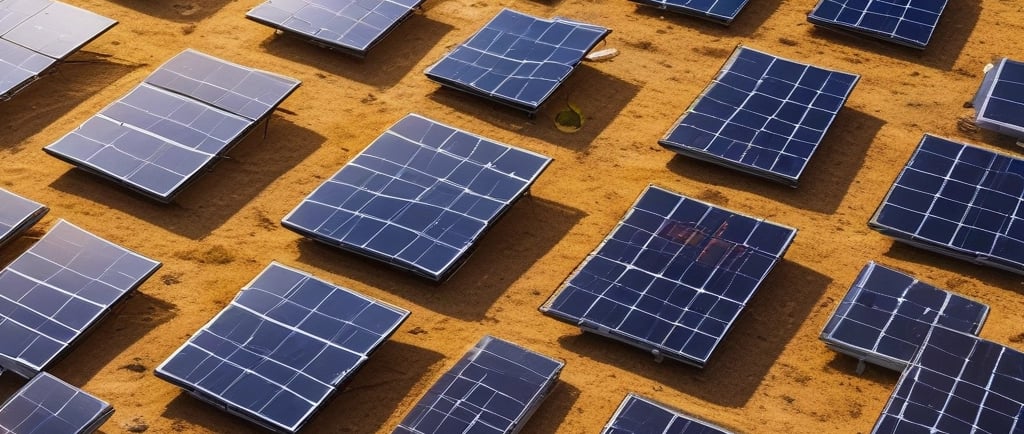
The Science of Solar: How Portable Panels Work
At Gadget Earth, we talk a lot about the freedom that solar-powered gear gives you. From charging your phone on a mountain trail to powering your laptop in a remote cabin, these innovative gadgets make off-grid living not just possible, but easy. But have you ever stopped to wonder how these small, portable panels actually work their magic?
The answer lies in some fascinating physics and clever engineering. Understanding the science behind your gear not only makes you a smarter traveler but also helps you get the most out of your durable tech. This guide will demystify the science of solar power, breaking down exactly how a portable solar panel converts a beam of sunlight into the clean, usable energy that powers your adventure.
Step 1: The Magic of the Photovoltaic Effect
At the heart of every solar panel is a solar cell, typically made from silicon. This is where the real science happens. The process is called the photovoltaic effect, and it's the core principle of all solar technology.
Think of a solar cell as a semiconductor sandwich. It's made of two layers of silicon, one "doped" with an element that has extra electrons (creating a negative, or N-type layer) and another doped with an element that has fewer electrons (creating a positive, or P-type layer).
When sunlight hits the panel, it's not the light itself that powers your device, but the tiny particles of light called photons. When a photon strikes an electron in the silicon, it gives the electron enough energy to break free from its atom. This creates a free-roaming electron. The built-in electric field between the N-type and P-type layers pushes these free electrons in a single direction, creating an electric current.
Step 2: From Direct Current (DC) to Your Devices
The electric current produced by the solar cells is Direct Current (DC). This is a one-way flow of electrons. Your phone, power bank, and most small electronic devices are designed to run on DC power, but they require a specific voltage and amperage.
This is where the charge controller comes in. A small circuit board inside your portable solar panel acts as a brain, regulating the flow of electricity to ensure a safe and consistent charge. It prevents your device from being damaged by an unstable current, which is why it's a critical component of any quality solar charger.
Some solar panels also feature an inverter. This device converts the DC power from the panel into Alternating Current (AC), which is what large appliances and laptops typically use. Portable power stations often have a built-in inverter, allowing you to plug in a laptop or a mini-fridge just like you would at home.
Step 3: The Role of Materials and Design
The science isn't just in the cells; it's also in the materials and design of the entire panel.
Monocrystalline vs. Polycrystalline: The most common portable panels use monocrystalline silicon cells. These cells are cut from a single, pure silicon crystal, making them more efficient at converting sunlight into electricity. They are more expensive but perform better, especially in low-light conditions.
Encapsulation: The solar cells are protected by a durable, transparent layer, often made from ETFE film or tempered glass. This material protects the delicate cells from dust, dirt, scratches, and rain, making the panel weatherproof and suitable for the outdoors.
The Power of Portability: The design of your eco-friendly gadget is crucial. Foldable panels are engineered with hinges that allow them to collapse into a compact size, while maintaining strong electrical connections between each segment. This clever design makes it easy to pack the panel and unfold it to capture the maximum amount of sunlight.
Conclusion: Smarter Gadgets for a Sustainable World
Understanding the science behind solar power isn't just academic; it empowers you to make smarter choices. You can appreciate why a high-efficiency monocrystalline panel is worth the investment and why keeping your panels clean is so important.
The next time you're on a trail and your phone buzzes to life, remember the invisible dance of photons and electrons that made it happen. At Gadget Earth, we're proud to offer gear that is not only powerful and reliable but also a testament to the beautiful simplicity of renewable energy. Power Your Journey. Sustain Your World.
Keywords Used:
the science of solar
how portable solar panels work
portable solar technology
solar-powered gear
innovative gadgets
durable tech
eco-friendly gear
photovoltaic effect
renewable energy
solar charger
monocrystalline silicon