
The Complete Guide to Portable Solar Panel Chargers for Every Traveler
Never run out of power again. This comprehensive guide covers everything you need to know about choosing the perfect portable solar panel charger for your next off-grid adventure.
SOLAR-POWERED GEAR
9/23/20254 min read
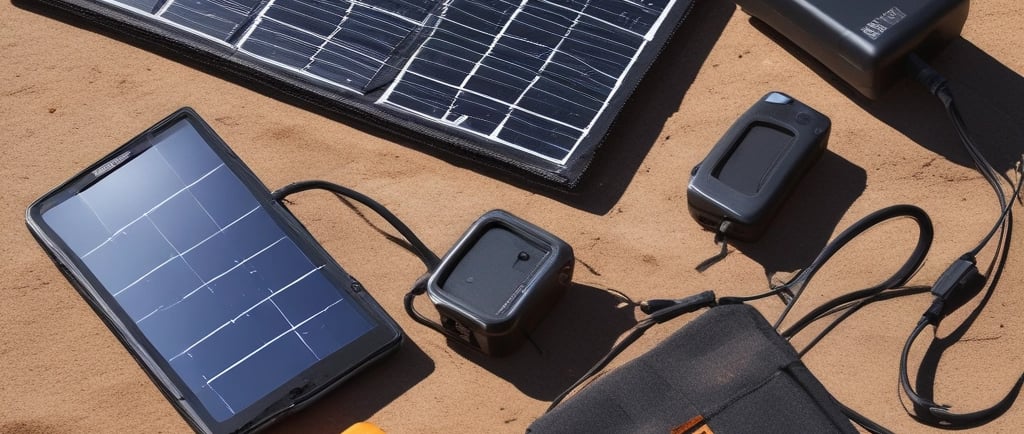
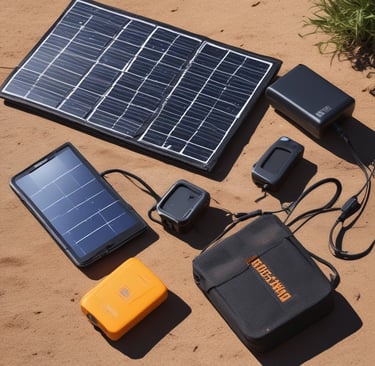
The Complete Guide to Portable Solar Panel Chargers for Every Traveler
Welcome to Gadget Earth, where we believe your journey should be powered by innovation and a commitment to the planet. For the modern adventurer, backpacker, and digital nomad, the most valuable piece of gear isn't just your phone or laptop—it's the reliable, renewable power source that keeps them running. That’s where portable solar panel chargers come in.
Gone are the days when solar power meant bulky, inefficient panels. Today's technology has revolutionized off-grid charging, making it more accessible, compact, and powerful than ever before. This comprehensive guide will walk you through everything you need to know to choose the perfect solar charger for your specific travel style.
Whether you're a minimalist hiker needing to top off your GPS, a car camper wanting to run a mini-fridge, or a digital nomad looking to power your entire mobile office, we've got you covered.
Understanding the Basics: How Portable Solar Panels Work
Before you buy, it's crucial to understand the key components and terminology. Think of a portable solar panel as a mini power plant. It captures sunlight and converts it into electricity that can be used immediately or stored for later.
Solar Cells: Most portable panels use monocrystalline silicon cells. You'll recognize them by their uniform black color. They are the most efficient type of solar cell, meaning they convert a higher percentage of sunlight into power.
Wattage (W): This is the power output rating. A panel rated at 20W can, under perfect conditions, produce 20 watts of power per hour. The higher the wattage, the faster it can charge your devices or battery packs.
Ports: Portable chargers typically come with USB-A, USB-C, or DC ports. For most modern smartphones and devices, USB-C Power Delivery (PD) is ideal as it allows for faster charging.
Integrated Battery vs. Standalone Panel:
Standalone Panel: This type of charger has no internal battery. You must plug your device or a separate power bank directly into it. The power flow is dependent on the sun, so if a cloud passes by, charging will slow down. These are often lighter and more affordable.
Integrated Power Bank: This is a combination of a solar panel and a battery pack. The panel charges the internal battery, which then provides a consistent, stable charge to your devices. This is a great option for inconsistent weather or for charging at night.
Choosing the Right Solar Charger for Your Adventure
Your perfect solar-powered gadget depends entirely on your needs. Here’s a breakdown by traveler type.
1. For the Minimalist Backpacker & Thru-Hiker
Every ounce counts. You need a device that is ultra-light, durable, and highly efficient. Your primary need is to charge essential gear like your GPS, headlamp, or phone for navigation and emergencies.
Recommended Wattage: 5W to 10W. This is enough to slowly trickle-charge your phone or a small battery bank while you hike.
Key Features to Look For:
Foldable Design: The ability to fold the panel into a compact, book-like size is essential for saving space in your pack.
Attachment Points: Look for carabiner loops or grommets that allow you to easily strap the panel to the outside of your backpack.
Integrated Battery: A small, integrated battery is a huge plus. It allows you to store a little bit of power throughout the day so you can charge at a consistent rate back at camp.
2. For the Road Tripper & Car Camper
You have more space and a greater need for power. You're likely charging multiple devices, from a laptop to a speaker or even a small camping fridge.
Recommended Wattage: 20W to 50W. This provides a much faster charge and can handle multiple devices at once.
Key Features to Look For:
Multiple Ports: Look for at least one USB-C PD port and one or more USB-A ports to charge various gadgets simultaneously.
Durable Casing: While not as critical as for a hiker, a robust, weatherproof design is still important to protect against rain and dust.
Kickstands: Built-in kickstands allow you to easily angle the panel toward the sun on your car or at your campsite for maximum efficiency.
3. For the Digital Nomad & Remote Worker
Your livelihood depends on your tech staying powered. You need a solution that can handle a high-power draw, like charging a laptop, all day long.
Recommended Wattage: 100W+. For a full-time off-grid setup, a larger, more powerful panel is a necessity.
Key Features to Look For:
High-Capacity Power Station Compatibility: The panel should be able to connect to a high-capacity power station or battery pack, which acts as the central hub for your power.
DC Output: Many high-wattage panels have a DC output that can directly charge power stations or even a car battery.
High-Efficiency Cells: Look for panels with a conversion efficiency of 22% or higher to ensure you're getting the most out of every ray of sun, especially on cloudy days.
Top Picks from Gadget Earth (Examples)
For Backpackers: The "Trailblazer Mini" Solar Charger (10W). Lightweight, durable, and with an integrated 3,200mAh battery, it’s the perfect companion for short or long treks.
For Car Campers: The "Sun-Voyager" Foldable Panel (40W). This panel has two USB-A ports and one USB-C PD port, allowing you to charge your phone, camera, and tablet all at once.
For Digital Nomads: The "Nomad Workstation" Solar Kit (100W). Paired with our high-capacity power station, this setup can keep your laptop, phone, and even a small camping fridge running for days.
Tips for Maximizing Solar Charging Efficiency
Angle is Everything: For the best performance, angle your solar panel to be perpendicular to the sun's rays. Adjust it every few hours as the sun moves across the sky.
Keep it Clean: Dust and dirt can block sunlight and reduce efficiency. Wipe down your panel regularly with a soft cloth.
Charge a Power Bank First: For a more stable and reliable charge, use your solar panel to fill up a power bank first, and then charge your devices from the power bank. This protects your gadgets from inconsistent power flow on cloudy days.
Choosing the right portable solar panel charger is a crucial step toward becoming a more self-sufficient and sustainable traveler. It's an investment in freedom, reliability, and our planet. At Gadget Earth, we're here to help you find the perfect gear to Power Your Journey. Sustain Your World.
Keywords Used:
portable solar panel chargers
solar charger
eco-friendly gadgets
solar-powered gadgets
durable tech
solar-powered backpack
digital nomad tech
off-grid power
foldable solar panels
sustainable traveler
solar panel for travel
best solar charger 2025