
The Digital Nomad's Guide to Staying Powered Off-Grid
Master remote work from anywhere. Our guide reveals the essential solar-powered gear, power management habits, and reliable connectivity solutions for the sustainable digital nomad working off-grid. Keywords: off-grid power digital nomad, remote work power, sustainable digital nomad
GUIDES & HOW-TO'S
9/25/20255 min read
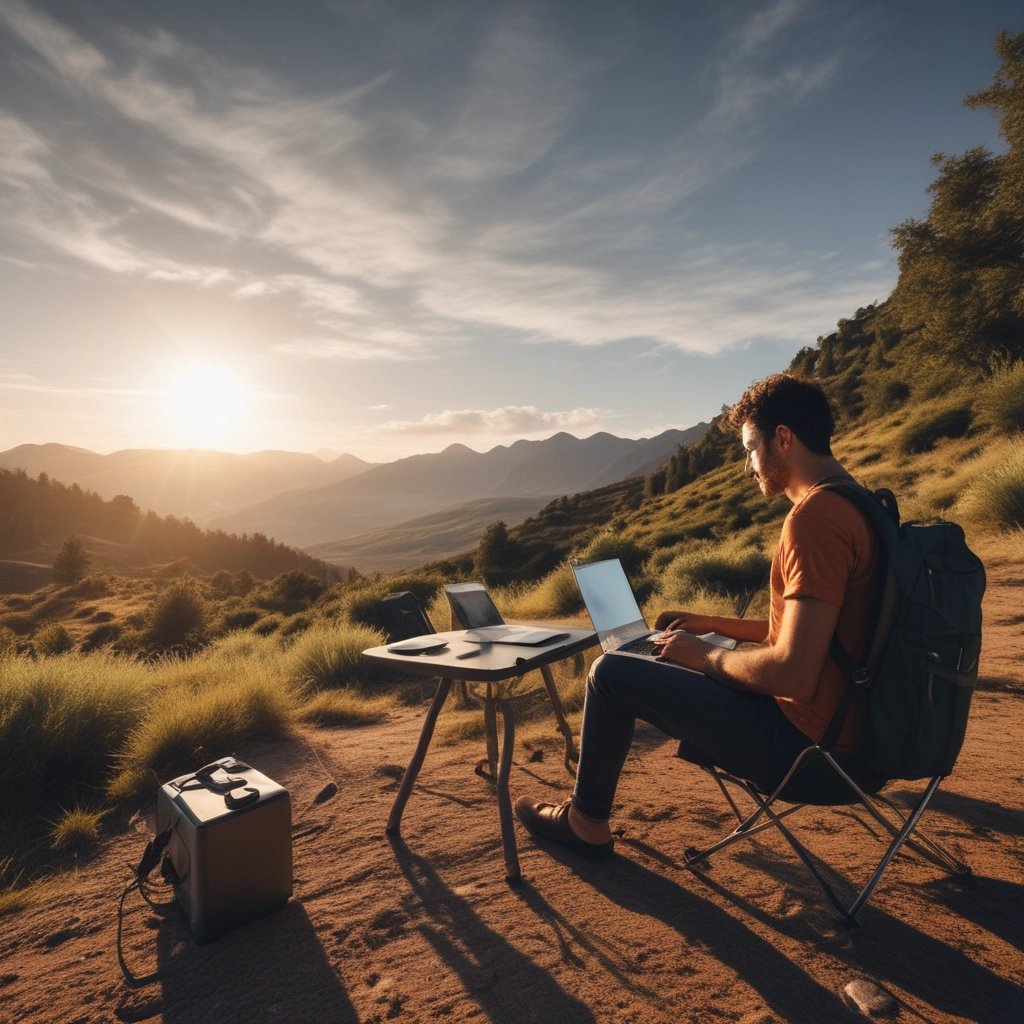
The sun dips below the horizon, painting the sky in hues of orange and purple. You’re perched in a beachside bungalow, a mountain cabin, or a cozy café in a remote village. Your workday is ending, but your laptop still has 40% battery, your phone is fully charged, and you’ve just uploaded the day's deliverables. The best part? You haven’t touched a wall outlet once.
This is the dream of sustainable digital nomadism: the ultimate freedom to work from anywhere without being tethered to the grid or compromising your environmental values. But this freedom hinges on one critical challenge: reliable off-grid power for the digital nomad.
For those whose office is the world, power isn’t a convenience—it’s a livelihood. A dead battery doesn’t just mean missing a sunset; it can mean missing a deadline, a client call, or a paycheck.
This comprehensive guide is your roadmap to achieving true energy independence. We’ll move beyond basic tips and dive deep into the essential gear, smart power management strategies, and reliable connectivity solutions that will empower you to work confidently from the most breathtaking corners of the earth.
Why Off-Grid Power is a Game-Changer for the Digital Nomad
Choosing an off-grid power setup isn't just an eco-friendly statement; it's a strategic professional move.
Unlimited Location Freedom: Break free from the scramble for the café’s only power outlet. Work from a secluded national park, a sandy beach, or a moving train. Your office is wherever you can find the sun.
Enhanced Productivity: The anxiety of a dying laptop battery can kill your focus. With a reliable power system, you can work deep, uninterrupted hours without one eye constantly on your battery percentage.
Professional Reliability: Nothing says "unprofessional" like dropping off a video call because your power died. A robust remote work power system ensures you’re always available and dependable for your clients and team.
Reduced Environmental Impact: By harnessing solar energy, you directly reduce your reliance on fossil fuel-based grid electricity. For the sustainable digital nomad, this aligns your lifestyle with your values, allowing you to explore the world while actively protecting it.
Phase 1: Assess Your Power Needs (The Critical First Step)
Before you buy a single gadget, you must calculate your energy consumption. Buying too little power means frustration; buying too much means unnecessary weight and expense.
The Nomad's Power Audit:
List Your Devices: Laptop, smartphone, external monitor, Wi-Fi hotspot, tablet, camera, etc.
Note Battery Capacities: Find the watt-hour (Wh) or milliamp-hour (mAh) rating for each. For laptops, this is often on the underside of the device or the power brick.
Estimate Daily Usage: How many full charges does each device need per day?
Example Calculation for a Typical Nomad:
Laptop (60Wh Battery): Used for 6 hours, requires one full charge per day.
Smartphone (15Wh Battery): Used heavily, requires two full charges per day (30Wh).
Wi-Fi Hotspot (10Wh Battery): On all day, requires one charge (10Wh).
Other (Camera, Headphones): ~15Wh.
Total Estimated Daily Need: 60Wh + 30Wh + 10Wh + 15Wh = ~115 Watt-Hours.
This 115Wh number is your baseline. Your gear needs to be able to generate and store at least this much energy per day.
Phase 2: The Essential Off-Grid Power Gear Arsenal
Your power system is a chain. Every link, from generation to storage, must be robust.
1. The Power Generator: Solar Panels
This is your primary energy source. Not all solar panels are created equal.
Types for Nomads:
Foldable Solar Panels: The gold standard. They unfold like a map, offering a large surface area for charging. Look for panels with multiple integrated kickstands for optimal sun angling.
Solar Blankets: Even larger and more efficient, these are ideal for setting up at a basecamp for a few days.
Rigid Portable Panels: Highly efficient and durable, but less packable. Best for van lifers or those who don't need to ultra-light travel.
What to Look For:
High Efficiency (21%+): Monocrystalline panels are more efficient than polycrystalline, meaning they generate more power in a smaller space.
Wattage (W): A 100W panel is a great starting point for a nomad. It can generate ~400-500Wh on a full-sun day, well above our example needs.
Durability (IP Rating): Ensure it's at least IPX4 water-resistant for unexpected rain showers.
Pro Tip: Position your panel perpendicular to the sun's rays. Even a slight angle adjustment can increase efficiency by 30-40%.
2. The Power Bank: High-Capacity Portable Power Station
This is your battery. It stores the solar energy you collect for use anytime—day or night.
Capacity is Key: Capacity is measured in Watt-hours (Wh). Based on our 115Wh daily need, a power station in the 300-500Wh range is ideal. It allows you to work for 2-3 days without sun and still recharge your devices multiple times.
Output Ports Matter: Ensure it has a variety of ports.
AC Outlet (Pure Sine Wave): Essential for powering sensitive electronics like laptops. Avoid modified sine wave inverters, which can damage your gear.
USB-C Power Delivery (PD): This is non-negotiable. USB-C PD can charge modern laptops and phones at their fastest speeds, often eliminating the need for the bulky AC adapter.
Standard USB-A and DC Ports: For older gadgets and accessories.
Weight and Portability: A 500Wh power station typically weighs 10-15 lbs. Ensure it fits your travel style.
Product Spotlight: Imagine a device like the "Gadget Earth Nomad Power Hub 500" – a 500Wh power station with a rugged design, a high-speed USB-C PD port, and a pure sine wave AC outlet, perfectly paired with our 100W foldable solar panel.
3. The Power Manager: Smart Charging Habits & Accessories
Your behavior is as important as your gear.
USB-C Laptop Charging: As mentioned, use the USB-C PD port on your power station to charge your laptop. It's far more efficient than using the AC outlet.
Cable Management: Invest in high-quality, short cables. Long, thin cables can result in significant power loss.
Device Efficiency: Lower your screen brightness, close unused applications, and use "power saver" modes on all devices. This can extend your battery life by hours.
Phase 3: Staying Connected: The Internet Challenge
Power is useless without connectivity. Here’s how to get online reliably.
The Local SIM Card: Still the most reliable and cost-effective method in most countries. Use an unlocked 4G/5G mobile Wi-Fi hotspot.
Smartphone Tethering: A simple backup, but can drain your phone's battery quickly.
Satellite Communicators: For the most remote workations (e.g., deep in the mountains or on a sailing trip), devices like the Garmin inReach or Starlink Roam provide a lifeline for basic messaging or even broadband internet, albeit at a higher cost. This is the ultimate tool for the sustainable digital nomad pushing the boundaries of remote work.
Building Your Sustainable Off-Grid Routine
Your system is only as good as your habits.
Morning Sun Ritual: As you have your coffee, set up your solar panel. Let it start harvesting energy immediately.
Work in Sessions: Work for 2-3 hours, then take a break. This conserves power and is better for your well-being.
Charge Strategically: Charge your power bank during the day from solar. Then, charge your laptop and phone from the power bank in the evening or during your breaks. Avoid charging devices directly from the panel unless necessary, as passing clouds can interrupt the charge cycle.
Embrace Energy Awareness: Be mindful of your consumption. This mindful approach is at the heart of being a sustainable digital nomad.
Conclusion: Your Office Awaits, Anywhere
Building a reliable off-grid power system is an investment in your freedom, your productivity, and the planet. It requires an upfront investment in the right gear and a shift in mindset toward energy awareness. But the payoff is immense: the ability to call a tropical beach, a serene forest, or a remote village your office, all while knowing your work is powered by the clean, abundant energy of the sun.
The world is your workspace. It’s time to power it sustainably.
Ready to build your ultimate off-grid office?
Explore the Gadget Earth curated collection of high-efficiency solar panels, high-capacity power stations, and durable connectivity tools designed specifically for the demands of the digital nomad life.